.avif)
If the future of cities could be measured not by their skylines, but by the health and connection of their residents, how differently might we build? In a market saturated with sprawling developments and underused amenities, the prevailing logic has long been: more units, more of the same. But what if the real innovation lies in subtraction—paring back the superfluous and reimagining the core of community itself?
Nate Helbach’s approach is as much a critique as it is a blueprint.
“One thing I think is just dumb is all these developers that are building 5,000 units, but for every 100 units they have a 300-foot little small fitness center. It’s not useful. It’s a waste of space and tenants never actually use it.”
Instead, Helbach and his team at Neutral are betting on a new model: efficient, beautifully designed buildings with minimal in-unit amenities, anchored by a single, amenity-rich hub that prioritizes health, well-being, and genuine community. The Edison in Milwaukee, set to become the world's tallest mass timber building, is their first large-scale test of this vision—a project that asks not just how we build, but for whom.
Doing Development Better: The Vision Behind Neutral
Few developers are willing to challenge the entrenched patterns of urban multifamily housing, but Nate Helbach, founder and CEO of Neutral, is doing just that. His approach to mass timber development is rooted in a conviction that urban environments can be both sustainable and deeply connected to resident well-being—not simply collections of units with perfunctory amenities.
“We’re trying to create really efficient low-rise buildings that have beautifully designed units but really no amenities and then a large building that has a ton of amenities,” Helbach explains. Rather than replicating underused amenities in every building, Neutral’s model—exemplified by the Edison in Milwaukee—centralizes resources to foster genuine community and optimize space. This shift challenges the prevailing logic of maximizing unit count at the expense of livability.

The Edison: Rethinking the Urban Amenity Model
A project poised to become the tallest mass timber building in the world signals more than a technical milestone—it marks a reconfiguration of how urban residents interact with their built environment. The Edison’s design centers on a primary hub packed with amenities—fitness, wellness, and social spaces—while surrounding low-rise buildings focus on efficient, high-quality residences.
“It’s really our first big catalyst project into this idea of having one main large hub and then having a lot of smaller buildings in the same market,” Helbach notes.
By consolidating amenities, Neutral reduces redundancy and encourages residents to engage with shared spaces, countering the isolation often found in conventional developments. This model leverages mass timber’s flexibility to create a network of buildings that function as a cohesive community.

Navigating Supply Chain Disruptions: Lessons from Edison
The promise of mass timber construction is often tested by the realities of global supply chains. When a fire on a shipping vessel threatened to derail a project’s timeline, Neutral’s reliance on prefabrication and modularity proved decisive. “Fortunately, due to some of the prefabrication and modularity of mass timber, we’re going to be getting our third and fourth shipment ahead of time,” Helbach shares. The modularity of the project allowed the materials to be swapped between floors, keeping the project on schedule, rather than being held up.
This underscores a broader topic: Large scale developers in North America’s dependence on European mass timber manufacturers. Why? It simply comes down to cost. Nate emphasis that the European producers are just more competitively priced. But, with such a long journey - they can introduce logistical risk. Helbach is candid about the need for competitive domestic capacity:
“We need very competitive mass manufacturers in North America.”
The Edison’s experience highlights how localizing supply chains is not just a matter of convenience, but of resilience and sustainability for future projects.

Expanding Access: Redefining Real Estate Investment
Supply chain innovation is only part of Neutral’s approach; the company is also reimagining who gets to participate in real estate development. By lowering the minimum investment to $10,000 for accredited investors, Neutral is broadening access to institutional-grade assets and inviting a more diverse group of stakeholders.
“We’re giving this kind of institutional quality asset to the masses,” Helbach says.
This direct investment model bypasses traditional intermediaries, fostering transparency and a sense of shared purpose among investors. The result is a more engaged investor community, aligned with the long-term success of sustainable projects.
Sustainability as Strategy: Aligning Environmental and Economic Value
The intersection of sustainability and profitability is often debated, but for Neutral, it is a calculated alignment. Helbach is unequivocal: “Sustainability is not just a buzzword; it’s a strategic advantage.” By designing buildings that consume resources at a rate commensurate with natural regeneration, Neutral positions itself to capture both higher occupancy rates and rental premiums.
This approach is not merely aspirational. As market demand for green buildings intensifies, the economic rationale for sustainable construction becomes increasingly compelling. Neutral’s projects demonstrate that environmental responsibility and financial performance are not mutually exclusive, but mutually reinforcing.

Building Community: Designing for Resident Well-Being
The impact of architecture extends beyond the physical envelope; it shapes the social fabric of its occupants. Neutral’s developments are structured to cultivate meaningful connections and support holistic well-being. Amenities are not afterthoughts, but integral to the resident experience—ranging from on-site fitness and nutrition services to access to medical professionals.
“What we are trying to do is basically ensure that the people living in the building actually experience a better life,” Helbach explains.
The data supports this focus: “If you have a friend or a relationship in the building that you live in, you’ll have a 60% chance greater that you will renew your lease year-over-year.” By prioritizing community, Neutral increases tenant retention and satisfaction, reinforcing the value proposition for both residents and investors.
Mass Timber’s Broader Impact: Linking Urban Demand to Rural Opportunity
The implications of mass timber extend well beyond city limits. As Neutral and others scale up adoption, the demand for locally sourced timber has the potential to revitalize rural economies—particularly in regions transitioning from legacy industries like paper manufacturing.
Helbach frames the challenge succinctly: “How do we get North America to adopt mass timber and use mass timber more often?” The answer lies in fostering collaboration across the supply chain, from forest management to fabrication. By anchoring urban development in rural production, mass timber can serve as a conduit for economic renewal and environmental stewardship.
Conclusion
Neutral’s trajectory illustrates how seismic shifts in construction methods, investment models, and community design can converge to reshape urban living. The Edison and its successors are not isolated experiments, but part of a broader movement to align sustainability, economic value, and social well-being. As mass timber gains traction and local supply chains mature, the industry faces a pivotal opportunity: to build cities that are not only efficient and profitable, but also resilient and deeply connected to the people—and places—that sustain them.
Frequently Asked Questions
1. How does Neutral’s amenity model differ from conventional multifamily developments? Neutral centralizes amenities in a single large hub building, while surrounding low-rise buildings focus on efficient, high-quality residences with minimal in-unit amenities. This reduces redundancy and encourages more meaningful community engagement.
2. What specific supply chain challenges did the Edison project encounter, and how were they addressed? A fire on a shipping vessel disrupted mass timber deliveries, but Neutral’s use of prefabrication and modularity allowed them to receive subsequent shipments ahead of schedule, minimizing project delays.
3. How does Neutral’s investment approach broaden access to real estate development? By lowering the minimum investment to $10,000 for accredited investors and bypassing traditional intermediaries, Neutral enables a more diverse group of stakeholders to participate directly in institutional-grade assets.
4. In what ways does Neutral’s design strategy support resident well-being and community retention? Amenities such as fitness, nutrition, and access to medical professionals are integrated into the main hub, and the design encourages social connections among residents, which has been shown to significantly increase lease renewal rates.
5. What broader economic and environmental impacts are associated with Neutral’s use of mass timber? Scaling mass timber construction increases demand for locally sourced timber, which can help revitalize rural economies and promote sustainable forest management practices.
.png)
Tired of Mass Timber Challenges Derailing Your Projects? Learn How to De-Risk & Deliver Them.
Lead mass timber projects with confidence — and leave delays, redesigns, and budget blowups behind.
✅ Solve early-stage design, sourcing, insurance, permitting, code & cost hurdles before they derail your project.
✅ Find technical answers on design, detailing, procurement, embodied carbon ROI, hybrid systems & more.
✅ Build relationships with developers, GCs, architects, and engineers shaping mass timber’s future.
Get your ticket— and get the insights, skills, and network to deliver mass timber projects successfully.

Latest episodes

CLT Home Construction w/ Kyle Hanson of Timber Age Systems
Most homes built today are the largest investment a family will ever make. A lot of them will fall apart within a lifetime. Construction productivity has gone backwards since 1965 while every other major industry has gotten more efficient, and the building science behind the average stick-framed house too often creates the exact conditions that cause it to rot from the inside out.
Kyle Hanson , Founder and CEO of Timber Age Systems, set out to build a company that solves that problem. Based in southwestern Colorado, with an office in Durango and manufacturing in Mancos, Timber Age is a vertically integrated CLT building system manufacturer that designs, mills, fabricates, and delivers high-performance single-family homes meant to last hundreds of years. The pricing is competitive with a standard code-built house. The system gets built while the foundation is still being poured, and a crew of four can dry in a house in days, not months.
This article walks through why so many modern homes are designed to fall apart, how Kyle's CLT-based system fixes those problems, what the build process looks like on site, and what design and build teams need to know to make the whole thing work.
Why Our Houses Are Designed to Fall Apart
Somewhere between the 1970s and 1990s, the residential industry started tightening up envelopes and adding more insulation without really understanding how air and moisture moved through a wall. Put a condensation layer in the wrong place, add a family that cooks, showers, and breathes inside, and moisture finds somewhere to collect. It settles, drains, and rots the sill plate thirty or forty years later.
"We built a lot of houses that really have been designed to fall apart without meaning to. No one intended for a house to do that."
That's the building science problem. The second problem is productivity. There's a long-running graph that tracks the output you get for $100 spent in a given industry, indexed to 1965. Construction is one of the only major worldwide industries whose productivity has gone backwards since then. Manufacturing improved. Agriculture improved. Construction got worse, and the industry keeps defending the way it has always done things.

The third problem is how the industry competes. Builders who compete primarily on cost grab market share for a while, then get squeezed out because they have no real differentiator. The race to the bottom pushes everyone toward the cheapest materials, the thinnest drawing sets, and the tightest schedules. Nothing in that model rewards longevity, better building science, or worker safety.
Stack the three together and you get a housing stock that wasn't designed to last, built by an industry that can't afford to change, in a market that doesn't reward getting it right.
If the problem starts in the wall, the fix has to start there too.
The Case for a Monolithic Wall
A standard stick-framed wall is a collection of parts. Studs every 16 inches. Sheathing. House wrap. Cavity insulation. Maybe exterior insulation if the builder is paying attention. Drywall on the inside. Each layer does a different job, and each one gets installed by a different trade at a different point in the schedule.
Kyle's argument is simple: the part count is the problem. The more variability inside a wall, the harder it is to predict how that wall will behave over time. Every connection is a potential failure point. If 1% of your connections fail and you have 5,000 of them, that's 500 places you have to go fix later. Cut the part count way down and you might be looking at five.
A three-inch-thick CLT panel replaces most of that with one continuous surface. It handles compression. It handles shear. It stores and releases humidity, acting as a hygrothermal buffer for the indoor environment. It's a fastening surface anywhere you want to drive a screw. And because the molecules in wood are tightly packed, it creates a thermal mass effect that delays how fast temperature changes move across the wall. Where Kyle lives in Colorado, nights drop to 40 degrees and days can hit 95. The mass of the panel smooths out the swing.

Wood also shows up differently in the material itself. CLT is typically 1% or less glue by weight. OSB and plywood can run 10 to 15%. Getting closer to whole wood means fewer chemicals inside the home and a surface that's naturally antimicrobial. Kyle pointed to research in Oregon around the use of wood in hospitals, where stainless steel is hard to keep clean enough to actually stay antimicrobial. Wood does it on its own.
The panel is the backbone. But a Timber Age wall is more than the panel.
Inside the Timber Age Panel
The CLT itself starts with 11-foot logs, many of them sourced from overcrowded federal and state forests in Colorado. The 11-foot length is deliberate; it lets Timber Age use more of each tree than a traditional saw log operation would. The logs get milled into boards, sorted, kiln-dried to 12% moisture plus or minus three, and planed into precisely dimensioned rectangles. Three layers of those boards get stacked at 90-degree rotations with adhesive between them, pressed, and cut to panel size.
The result is a three-inch-thick panel that stays within plus or minus one millimeter of its specified dimensions over time, because the defects and movement tendencies of individual boards cancel each other out across the three layers.

But the CLT alone only gives about R4. It's the backbone, not the finished assembly. From there, Timber Age layers the rest of the wall:
- An air control membrane on the outside of the CLT. The CLT already controls air movement, but the membrane lets them guarantee how much air moves through.
- Wood I-joists on outside, running perpendicular to the panel, which tie the 5-foot by 10-foot CLT panels together into larger 10-foot by 20-foot assemblies and create a 12-inch cavity on the outside.
- Dense pack cellulose blown into the cavity behind the WRB. Recycled content, class A fire resistant, and enough depth to bring the assembly up to R48.
- A weather-resistant barrier on the outside of the cellulose.
- A rain screen batten ready for whatever siding the project calls for.
- Pre-installed windows, taped and sealed in the factory.
The R48 matters because of dew point. In a standard R19 stick-framed wall, warm, moist indoor air can move through the cavity and hit the sheathing or house wrap before all that moisture has a chance to spread out. When it does, it condenses into liquid water and runs down into places none of the building materials were designed to get wet. With R48 across the assembly, the temperature gradient is gentle enough that nothing inside the wall ever reaches dew point.
The panel is one thing. Watching it land on a foundation is another.
One Trip Around the Building
Kyle designed the system around a specific goal: one trip around the building.
Think about how many times a square foot of wall gets addressed in a standard build. Framers put up the studs. Someone sheaths it. Someone else wraps it. Insulators come for the cavity. Electricians run wire. Drywallers hang the inside. Each trip involves a different crew, a different schedule, and different exposure to weather, heights, and sequencing mistakes. Most of the work happens above the waist or below the knees, meaning workers spend a lot of their day on ladders and scaffolding, addressing the same wall over and over from opposite sides.

A Timber Age build compresses that into something very different. A crew of four to five, plus a crane operator, shows up with a trailer. Because every Timber Age building has a digital twin, the crew walks in with an animation of the full sequence and a scripted role for each person. One person lays out screws. One preps the caulk and air barrier. One rigs. One does quality checks.
By mid-morning on the first day, a crew is typically setting one 10-foot by 20-foot assembly every 20 minutes. That works out to roughly 800 to 1,200 square feet of enclosure per day. A typical house is stood up and weather-tight in two to three days from the time the trailer shows up. After that, the crew makes its one trip around the outside, stitching panel joints, filling the 12-inch cavity, pulling the WRB across, and installing rain screen and siding.
"We’re trying to make the cruddy or the hard jobs better so that the people that are the trades folks that are coming into that area have a better place to be able to work in."
The safety piece matters to Kyle. He points out that construction is one of the only industries that still treats ladders and working on roofs as normal, and that the people most exposed to it are framers, who leave the trade at a rate of four or five for every one who joins.
A Timber Age build is built around taking that exposure out of the equation. Panels lie flat while the crew preps them, keeping most of the work between waist and shoulders instead of forcing people up on scaffolding. Scaffolding that does go up - goes up once. The roof panel arrives as a walking surface the crew can tie off to. The framing crew that would normally be tipping rafters in place isn't on the job at all.
The trades that follow get something even better. They're working inside a closed, super-insulated shell that can be warmed with a hair dryer, doing finish carpentry, plumbing, and electrical in a space that's already weather-tight.
Put it all together and the total schedule for a 1,200 to 1,400 square foot two-story home drops from the industry-standard six to eight months down to roughly two to three months, assuming the trades stay engaged. That last assumption is where a lot of projects stumble.
Getting the schedule compression the system promises depends on something most residential projects never do.
The Big Room: Coordination Before the First Shovel
The construction industry has known for a long time that integrated project delivery works. The Lean Construction Institute has been publishing on it. AIA has an integrated project delivery outline. The problem is that most of those tools only show up on very large commercial jobs. The residential world keeps doing business the way it always has: the GC starts construction, and the electrician has never talked to the framer or the plumber before they show up on site.
A Timber Age build exposes that gap fast. When panels go up in three days instead of three weeks, every downstream trade is suddenly the critical path. If the electrician has other jobs booked in the five-week window they usually get between the framer leaving and the drywaller arriving, the job comes to a halt even though the envelope is done.
The fix is what manufacturing calls Obeya: the big room. Get everyone in the same space before the job starts. Watch the sequencing animation together. Talk about who goes first, second, and third. Sign up for arrival dates. Agree on what the handoffs look like.

Kyle's advice on this is direct. Pay the trades to be there. If an electrician or a plumber needs to be compensated for the hours they spend in the room, budget for it. A thousand or two thousand dollars per subcontractor for a planning session is a rounding error on a project where the envelope just got cut from eight months to three. What comes back is a job site where nobody shows up confused, frustrated, or blocked by the crew that came before them.
The material is what makes the speed possible. The coordination is what makes the speed real.
The Bigger Idea
Kyle keeps coming back to the same frame. The investment in a house is the largest one most people will ever make. Sustainability, in his words, means that person and five more generations get the chance to use it. That takes a house that can last hundreds of years, built with materials that don't introduce new problems, assembled by people whose jobs are safer and more dignified than the industry has historically offered them.
The Timber Age system is one expression of that idea. Smarter, healthier assemblies. A factory process that uses production intelligence the industry has been stripping out. A build process that protects workers and compresses schedules. A coordination model borrowed from manufacturing because manufacturing has already solved problems residential construction is still arguing about.
"We’re doing something, and trying to preserve something, that really needs to go away."

The Envelope: What Every Mass Timber Designer Needs to Know
Most mass timber conversations focus on the middle of the building. Things like spans and grid layouts. Chris O’Hara says that’s the easy part. And most engineers need to give the edges more attention. He’s a structural engineer and a founding principal at Studio NYL, now a Lerch Bates company. He’s worked on 25+ mass timber structural projects and another dozen on the facade side. On many of them, he’s done both.
That combination is rare. And it’s why Chris sees things most structural engineers miss. Getting the wood to perform in the middle of a building is straightforward. It’s what happens at the edges that determines whether a building lasts 20 years or 200: where the timber meets the facade, where the floor meets the wall, where the warm inside meets the cold outside.
This piece covers what Chris thinks about on every project: thermal performance and condensation, construction phase moisture risk, the transitions that become failure points, and the fabrication capabilities that are expanding what’s possible now.
Fast Envelope Systems & Moisture Mitigation
Every mass timber building faces its highest moisture exposure during construction, not over decades of use. Wood retains the capacity it had as a living tree to absorb and move water. Once moisture reaches the end grain of a cut timber element, it spreads. And unlike a living tree, a mass timber floor or wall can’t manage it out.
Temporary membranes, protective coatings, and onsite SOPs are important, but Chris says the more durable answer is getting the enclosure on fast.
That’s one reason panelized and unitized curtain wall systems fit naturally with mass timber. Both are prefabricated off-site. Both install quickly. Marry the speed of mass timber erection with the speed of a panelized facade system and the building gets weathered in before a bad rainstorm can do lasting damage.
Speed also has an economic dimension. Faster enclosure means fewer general conditions days on the contract. It gets the building to sale or occupancy sooner. When mass timber is being weighed against alternative structural systems, speed is often what tips the balance.
Panelized systems help the construction moisture problem. But they introduce a new one. Their aluminum-heavy assemblies can create condensation risk long after the building is occupied.
The Cookware Problem: Thermal Performance and Condensation
That’s why the facade details matter so much. Aluminum is everywhere in building facades. It’s also what we make cookware out of. The problem is, it transfers thermal energy extremely well. Chris uses that comparison on purpose. When you wrap a mass timber building in aluminum facade systems, those elements sweat. And if you let that condensation reach the timber, you have a problem.
The fix is getting the insulation to the outside. Putting insulation inside the stud cavity draws the dew point into the wall assembly. The dew point is where water vapor turns to liquid water. Put insulation on the exterior and that dew point stays outside the weather barrier. Condensation doesn’t reach the timber.
As Chris puts it: "When you get cold, you put the sweater on the outside. You don't swallow it."
At transitions where aluminum has to be used, thermally broken systems (where a low-conductivity material interrupts the aluminum from going continuously inside to outside) reduce the rate of heat transfer. It’s not a true break in the thermal line, but it meaningfully reduces the conductivity compared to unbroken aluminum. For attachment points, Chris favors low-conductivity materials like fiber-reinforced polymers wherever the geometry allows.
The opaque wall is the easier problem. The harder one is what happens when glazing and structure meet, and that’s where the most consequential details live.
Critical Transitions: The Details That Decide Durability
The floor-to-wall interface is the condition Chris is most focused on. It’s where the end grain of the mass timber floor system sits right against the facade. It’s where the window frame, surrounded by aluminum, comes closest to the most moisture-sensitive part of the timber. And it’s where most of the energy loss in a curtain wall system happens.
Panelized and unitized curtain wall systems tend to carry more aluminum, which increases condensation risk at the stack joints, where one panel meets the panel above. Chris lifts the glazing up 18 inches from the mass timber floor deck wherever possible. If condensation does form at that joint, it has room to dry before it reaches the wood.
The glazing interface is one version of this problem. It's relatively manageable because you can see it coming. The harder version is when the structural system creates geometry that the envelope has to wrap around, and nobody has thought through what that actually looks like in the field.
The US Forest Service Museum in Missoula is a good example of all three systems colliding at once. The project used mass timber shear walls, which is the right call structurally, but the hold-down hardware tying those shear walls to the foundation created a plate on the side of the timber that Chris describes as looking like a cheese grater: angled screws at a batter, all kinds of different planes and jogs. That geometry doesn't come from a bad structural decision. It comes from doing the structural job correctly and then having to figure out how the envelope survives it.
Running a waterproofing membrane over that kind of surface without tearing it is nearly impossible. Chris worked through how to protect those membranes while also getting enough insulation over the steel plates. The steel is far more conductive than the timber, so insulation placement at those connections mattered as much as anywhere else on the building. It doesn't show up clearly in a 3D model, he notes, unless you've worked through it a few times. Getting it boxed out on paper before construction started was what kept it from becoming a problem in the field.
Fasteners and the Waterproofing Membrane
One of the things Chris watches closely on CLT wall projects is fastener penetrations. A CLT wall is all structure, so crews tend to fire fasteners wherever they need them. Each one perforates the waterproofing membrane. Some membranes are marketed as self-sealing, but Chris notes those are typically designed for nails, not screws. His approach: put a small amount of silicone on the wall and fasten through it, so the threads draw the silicone into the hole, then seal over the top of the fastener. A small step. Easy to do during construction. Harder to fix after the fact.
The Pen Test
The pen test, sometimes called the pencil test, is a standard quality control check used in building enclosure consulting and commissioning. The concept is simple: take a wall section or building detail and trace each control layer continuously from one end to the other without lifting your pen. There are four layers to check: thermal, air, water, and vapor. Any point where you have to lift the pen is a discontinuity, and discontinuities are where buildings leak, lose energy, and accumulate moisture.
Chris applies this check on every project. In his version, you trace the thermal line and the air and water line around the full building perimeter. If you ever have to pick up your pen because something got in the way, that's where it's going to leak or let thermal energy through and create a condensation problem. The goal is a continuous, unbroken line from grade to roof. Every detail in this article is a place where the pen comes up: the stack joint at the floor line, the cheese grater shear wall plate, the fastener through the membrane. The pen test is how you find them before the building does.
Every one of these details has to be solved before anyone picks up a tool on site. The fabrication capabilities now available are changing how much of that problem can be designed out entirely.
Advanced Fabrication: Designing the Thermal Problem Out at the Source
The details covered so far, the stack joints, the shear wall connections, the fastener penetrations, all have one thing in common: steel and aluminum creating thermal bridges where the envelope is most vulnerable. One of the ways Chris addresses that problem at its source is through the connections themselves.
Ten years ago, he was careful with cuts. Complex geometry meant complex steel connections, which meant more metal at the perimeter, more thermal bridging, and more coordination risk. The rule was to simplify.
That has changed. The milling and cutting equipment at today's mass timber fabricators can produce bearing cuts at a level of complexity that wasn't practical before. Connections that once required significant steel hardware can now be handled by the timber itself. The wood carries the load. Fewer pins, less steel, and better fire performance because there's less exposed metal. And fewer metal connections at the perimeter means fewer places where the thermal line gets interrupted.
The same logic extends to the facade structure itself. Rather than accepting aluminum extrusion as the default spanning element in a curtain wall, Chris uses glue-laminated timber instead. He calls it a timber curtain wall: the glass capture and thermal break hardware come from a conventional glazing veneer, but the structural element spanning floor to floor is glulam instead of aluminum. Aluminum curtain wall systems are optimized for spans of 10 to 15 feet. A glulam can go 30 to 40 feet. The geometry can be anything. And the material conducting heat from outside to inside is wood, not metal. His team recently completed a version of this in Boston, a curtain wall with a 25-foot glulam spanning a historic library, alongside an original glulam facade from decades earlier.
What's now possible with complex CLT geometry tells the same story. A demonstration project at Post Office Square in Boston, currently in permit, has around 1,400 square feet, roughly 20 different roof slopes, all CLT, three-ply and five-ply mixed depending on structural need, and naturally ventilated. Chris calls it thermally one of the best buildings his team has designed. He couldn't have built it 10 years ago. When he brought the geometry to fabricators now, the response was: no problem.
Getting the Wood to Last
Chris has spent 20 years watching mass timber projects succeed and fail at the same place: not in the structure, but in the decisions made at the perimeter. Whether it's a construction phase moisture event, an aluminum stack joint sitting against a floor deck, a cheese grater shear wall plate that nobody detailed around, or a fastener through an unsealed membrane, the problems are almost never structural. They're envelope failures that compound until someone has a reason to say timber doesn't work.
That's the argument Chris is making with every project. The material is right. The fabrication capabilities are there. The industry is getting better at designing thermal bridges out at the source, replacing aluminum spans with glulam, cutting connections so wood carries the load instead of steel. What's still catching teams is the assumption that if the structure is good, the building is good.
That’s not enough. Getting the wood to work in the middle is the easy part. It's everything that happens at the edges that determines whether a building lasts 20 years or 200.
Chris O'Hara is a senior design principal at Lerch Bates. You can find him on LinkedIn or at studionyl.com.

Pick Mass Timber in SD to Avoid These Problems
Most mass timber projects don’t fail on the jobsite. They fail in a conference room somewhere around DD, when the estimate lands and the number is twice what anyone expected. At that point the conversation shifts from how do we build this to can we still build this. And a lot of the time, the answer is no.
Mason Brandt, P.E. has been in that room. He’s the president of WoodCore Engineering , a structural engineering firm out of Lancaster, Pennsylvania focused on wood and timber. He’s worked on north of 25 mass timber projects, and on more than one of them he’s been the person who kept timber on the table when the budget said otherwise.
In this piece he breaks down the decisions that determine whether or not a mass timber project makes it to construction, starting with the one most teams make too late.
Timber or Not: The Make-or-Break Decision in SD
The structural grid for timber is different from steel. It’s different from concrete. Beam spacing, column layouts, span directions. These aren’t interchangeable. Which means if a team gets to 50% or 90% DD with a steel grid and decides to explore timber, they’re not making a design decision. They’re starting over.

Mason has seen this play out more than once. A project comes in with a steel layout, someone raises the idea of timber late in the process, and suddenly the team is trying to make timber perform like steel. That’s where cost becomes a problem. Not because timber is inherently expensive, but because inefficiency is expensive. Every span, every beam that’s not optimized, every column that doesn’t fit the grid - it all adds fiber volume, and fiber volume drives cost.
The fix isn’t complicated. Decide in SD.
If timber is on the table, flesh it out before the grid gets locked down. It doesn’t have to be all or nothing either. Hybrid structures work. Timber plays well with steel and concrete. But the time to make that call is schematic design, not halfway through DD.
But even when the timber decision happens at the right time, the first estimate doesn’t always land where you need it. Here’s what you can actually do about it.
The Cost Problem and How to Pull It Back
Even when timber is decided early, the estimate can still come in high. On one project Mason's team joined mid-stream, the number came back 40% over the owner's budget. The straightforward response would have been to switch to steel. Instead they went back through the structure.
They rotated CLT panels to span the shorter direction, eliminating entire rows of girders. They cut beams and downsized columns from 12x12 to 10x10 across the building. It added up to significant fiber savings. Fewer pieces also meant faster erection.
Each change was small on its own. Together they brought the project back to a full timber building at a number the owner could live with.
The Cost Lever: What Moves the Needle
The lever here is fiber volume. With timber, material cost is driven by how much wood you're using. Reducing piece count, column sizes, optimizing spans - these are budget decisions. The first number you get back isn't always the final number. Having someone on the team who knows how to pull it back down makes the difference between a timber building and a steel one.
One of the biggest variables in that fiber volume equation, and one most teams don't think about early enough, is species selection.
Species Selection: A Hidden Deal-Breaker
Specifying a structural steel beam is straightforward. You pick a grade, put it on a drawing, and multiple fabricators can source it. Bidding is competitive. With timber it doesn’t work that way.
Not every species or grade has multiple manufacturers who can competitively bid it. The NDS supplement lists glulam grades and layups with different material properties, but not everything in that document is commercially available.
In some cases there’s one manufacturer who makes a given product. That’s not a bidding situation. That’s a take-it-or-leave-it situation.
Species choice also affects structural capacity. A 20F glulam and a 24F glulam have different strength values. The lower grade might cost less per cubic foot, but if you need more volume to achieve the same structural performance, the savings disappear. If beam depth or column size is constrained by the architecture, you might not have a real choice at all.
Bonus Tip: Funding Sources & Species Decisions
Your funding source might decide your species for you. Buy America requirements, for example, eliminate Canadian and European products entirely. If that question isn't addressed early, you could be deep into design with a species not available in the United States before finding out you have to switch to another. Then you’re forced to revalidate the structure, resize members, and explain to the owner why the building looks different than expected.

Regional Sourcing and the Doug Fir Default
Most mass timber case studies in the US come from the Pacific Northwest, where Doug Fir is the local species and the supply chain is well established. As a result, a lot of architects, especially on their second or third timber project, default to Doug Fir because it’s what they know.
On an East Coast project, that default comes with a shipping cost. Shipping finished elements from the West Coast may offset any material savings. Southern Pine and European Spruce are both structurally viable alternatives that can be easier and cheaper to source depending on where the project is. The right answer depends on the project. But the team needs to have the conversation early enough for it to matter.
The question is who’s the right person to navigate all of this, and when do you bring them in.
Design Assist vs. Delegated Design: Getting the Right People in the Room
There are two primary ways a specialty timber engineer like Mason engages on a project. Understanding the difference matters because each one covers different ground and carries different responsibilities.

Design Assist
In a design assist engagement, the specialty engineer comes in alongside the design team and provides real-time feedback as decisions are being made. Member sizing, species selection, grid layout, connection approach -- all of these have cost implications, and design assist is the opportunity to get that feedback before the bid requests go out.
The design assist engineer doesn’t stamp the drawings. That responsibility stays with the engineer of record. But having a timber specialist in the room early means fewer surprises when the estimate comes in, and fewer situations where the team is trying to reverse-engineer a cost reduction under pressure.

Delegated Design
Delegated design typically comes later in the process. The engineer of record specifies performance criteria and loads for connections, and the specialty engineer designs to those criteria and stamps those calculations.
This approach makes sense because different timber manufacturers have different connection preferences. Some lean toward steel hardware. Others prefer wood-to-wood connections. Delegating the connection design gives the fabricator flexibility to work within their own system while still meeting the structural requirements set by the EOR.
One thing that comes up in delegated design, and in timber construction generally, is field welding. Mason’s position is straightforward: avoid it. The difference between 300 field-welded connections and 300 bolted connections is significant in time, labor, and complexity. Bolted connections are an assembly task. Welded connections are a skilled trade task that introduces variables you don’t want to manage on a timber job.
The connection decisions made on paper are the same ones the crew has to live with on site. Which is why what happens in the field deserves as much attention as what happens in the model.
Solving Field Problems Before They Hit the Site
Mass timber is a finished product. Elements come off the truck ready to install which means there’s very little room for field modification. If something doesn’t fit, the options are limited and expensive.
Mason’s approach is to pull field problems back into the office as early as possible. Tolerances, install sequencing, connection geometry. If a bolt can’t physically fit given the geometry of three beams meeting at a single point, that’s something to solve on paper, not with a piece swinging 20 feet in the air and a crane on standby.

A Real Example
Mason worked through exactly this on a train station project in Maine. The assembly sequence on that job wasn't flexible. Each piece supported the next. A glulam beam bears on a CLT wall panel, which supports a floor panel, which carries a wall above. They also had to work around existing steel and coordinate with railroad schedules for limited installation windows. Every one of those constraints got worked through before anyone picked up a tool. This avoided idle crane time, or the crew standing around while someone figures out what should have been solved at a desk.

Clarity Is Kindness
Clarity in the documents is one of the most valuable things a design team can provide. What’s a minimum performance requirement? What’s flexible? What species is mandatory and what’s open to alternates? When those questions are answered clearly and early, every team bidding the job is working from the same information, and the owner isn’t absorbing the cost of ambiguity through change orders.
The flip side is also true. When a project goes sideways, people rarely say the design was bad. They say timber is expensive, timber is complicated, timber isn’t worth the hassle. Most of the time that’s not a timber problem. It’s a process problem. A decision that came too late, a species specified without checking availability, a fabricator who wasn’t in the room early enough.
The projects that work are the ones where the right people are involved early, the documents are clear, and the team is asking questions before the answers get expensive. That’s not specific to timber. But in timber, the margin for error is smaller and the cost of getting it wrong is higher.
As Mason puts it: clarity is kindness.
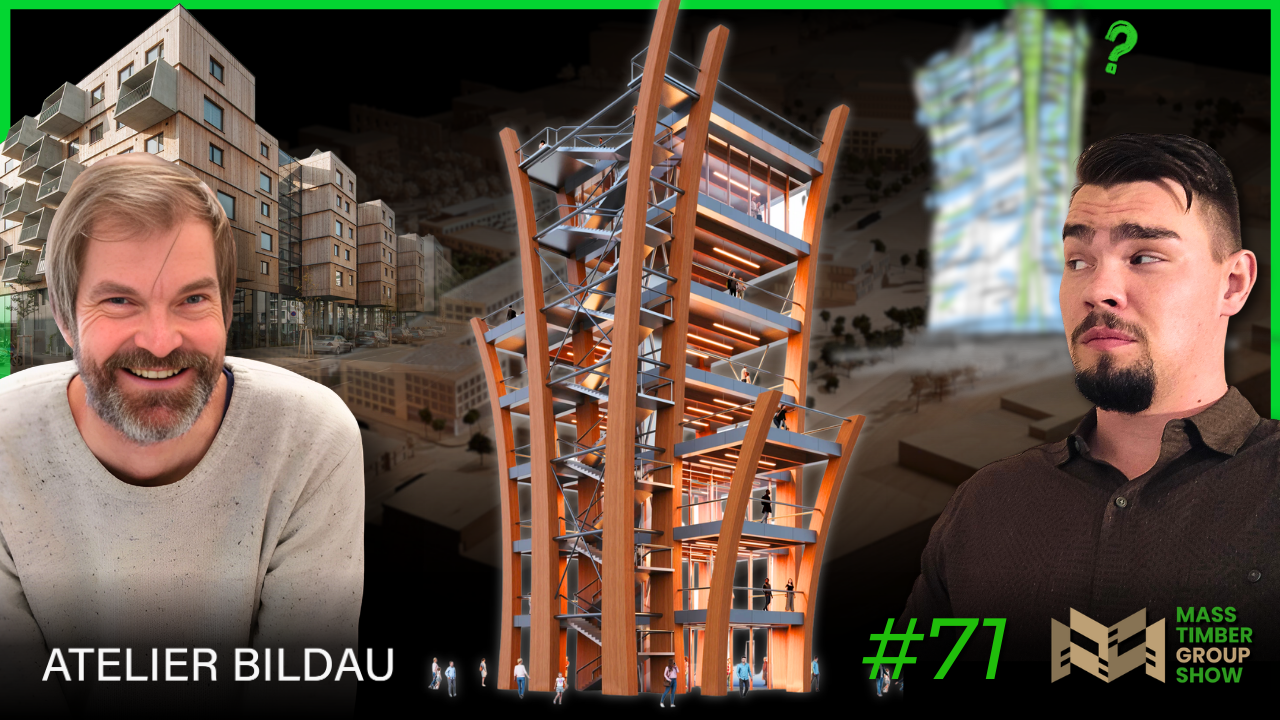
A Global Tour of Mass Timber. 2 Decades of Lessons from Building with Wood w/Sebastian Bildau
Mass timber evolves through global conversations, ideas jumping from landscape urbanism to affordable housing, from precision prefabrication to the rise of biogenic materials. But those ideas don't move on their own. They move through people who've worked across the entire system from end to end. Sebastian Bildau is one of those people. A German architect and mass timber specialist with nearly two decades of experience starting at CLT's ground zero in Austria, he now runs Atelier Bildau in Munich, a design workshop focused on timber at every scale. This episode is a walk through the projects that shaped his thinking.
👉 Want to grow your mass timber network and stay up to date on industry trends and new innovations like this? Join Our Newsletter
Forests as Cleanup Tools and Future Building Material
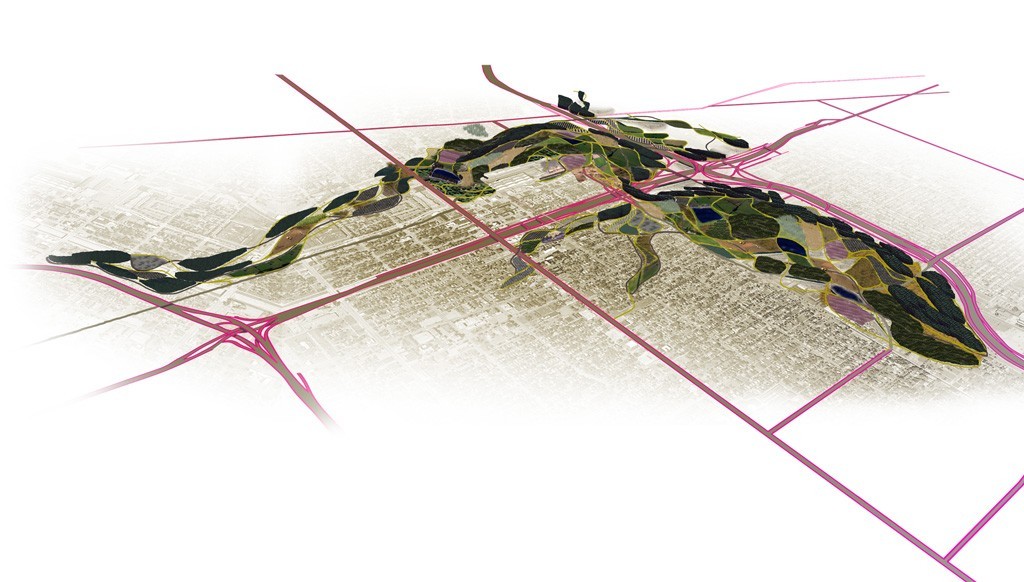
Most people think the mass timber supply chain starts at the sawmill. Sebastian starts earlier, at the dirt. His early work in landscape urbanism explored what happens when you treat a post-industrial contaminated site not as a liability but as a long-term asset. The concept was simple: plant fast-growing tree species like poplar directly on polluted land. In the early years, the trees do the remediation work, absorbing heavy metals from the soil that heavy industry left behind. Over time, the land heals. After 20 to 40 years, what started as a row of saplings on a scarred urban site becomes a thriving park with mature timber ready to harvest.
The business case is built in from the start. Rather than paying to remediate contaminated land through conventional means, the trees do it naturally, and then pay dividends as a local material supply. Shorter supply chains, lower transportation costs, and a building material with a documented environmental story attached to it before it ever reaches a factory.
Takeaway
Sustainability in mass timber isn't just about what you build, it's about where the material comes from. Thinking that far upstream is rare. It's also an advantage.
Affordable Housing in Vienna, Value Engineering Done Right
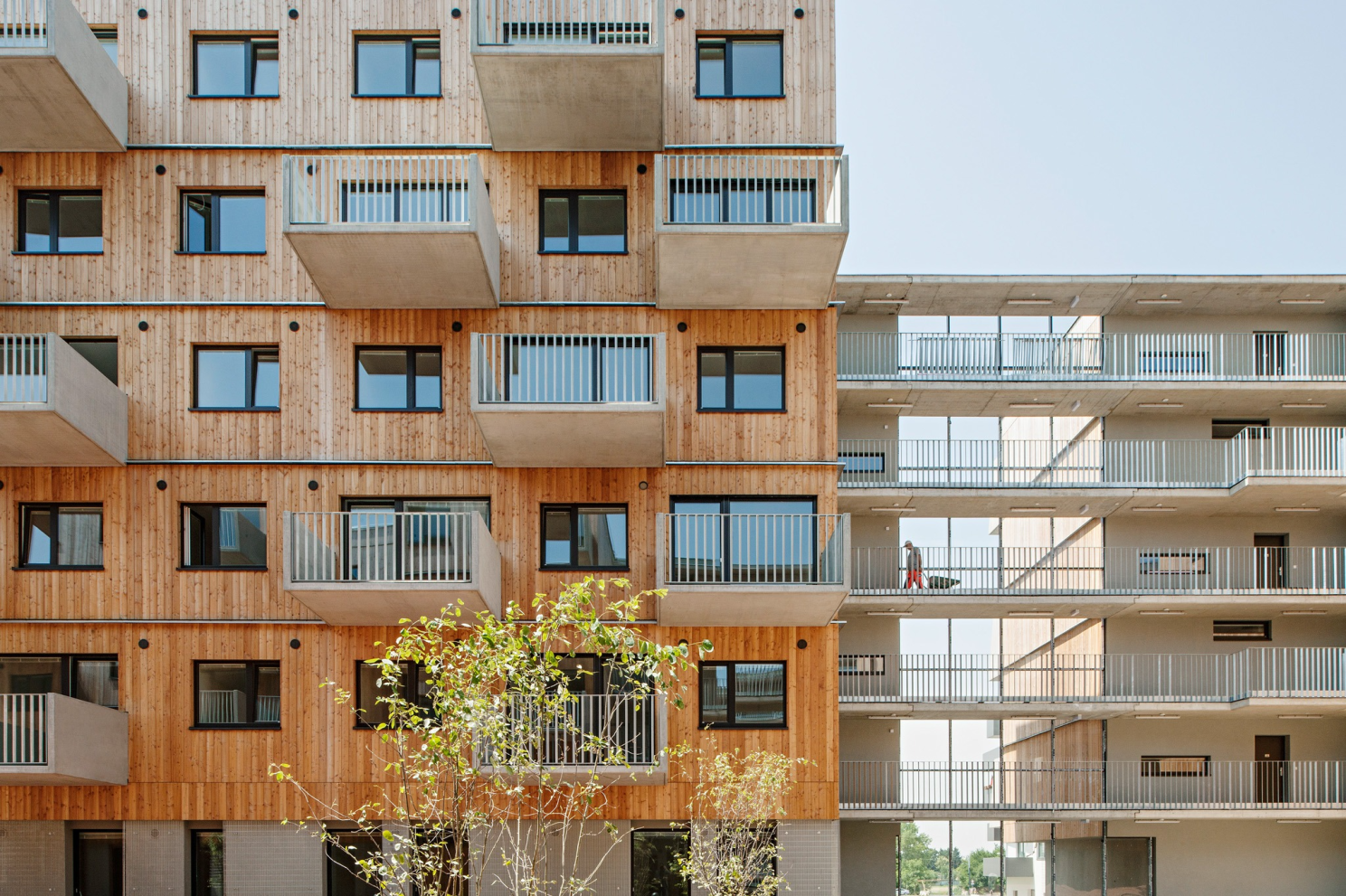
On a former airfield between Vienna and Bratislava, Sebastian's team delivered 200 units on a 90x90 meter plot at roughly $168 per square foot, and still found a way to build with timber. The project came out of a competition and was constrained from every direction: tight budget, dense urban site, strict local fire codes, and a client building social housing at scale.
The structural solution was a hybrid: thin concrete slabs, minimal columns, and concrete corridor walls for durability and acoustic performance. Everything else, the prefabricated exterior panels, the facade, the upper floors, was timber. The untreated larch facade was the boldest move, and also the most contested. At the time, a combustible exterior skin like that wasn't permitted under Austrian code. The city's approval authority pushed back hard. The team's solution was a metal fire-separation band projecting several inches beyond the facade plane at each floor level, a detail that physically interrupts flame spread and gave the authorities what they needed to sign off.
It sounds like a small thing. But that one detail unlocked the entire aesthetic of the building without adding significant cost or structural weight. In fact, by minimizing slab depth and keeping the concrete footprint as lean as possible, the team reduced the building's overall weight and kept costs in check throughout. A lot of value engineering went into making it work, but the result was a dense, livable, affordable project that didn't compromise on the timber vision.
Takeaway
Code obstacles aren't reasons to abandon an approach. They're engineering problems that usually have solutions, if you're willing to dig for them.
Robotically Prefabricated Panels in Berlin
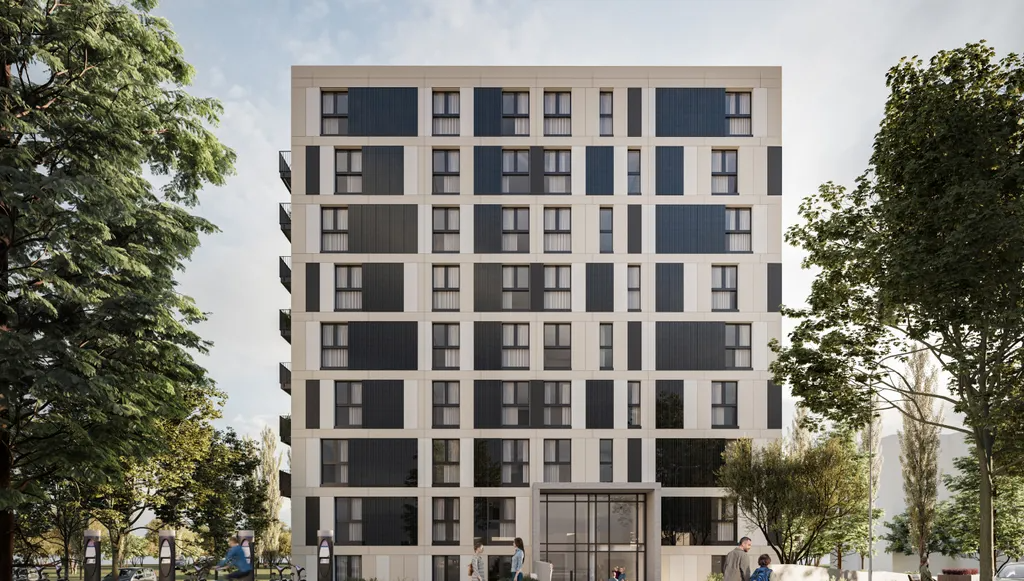
A few years later, working as lead designer at a Berlin-based proptech developer, Sebastian took prefabrication further than most residential projects ever go. The building used a robotic manufacturing line to produce both inner and outer wall panels, and arrived at site completely ready to install. Every panel came pre-loaded with electrical wiring and data cables. The panels went up, got connected, and the building came together fast.
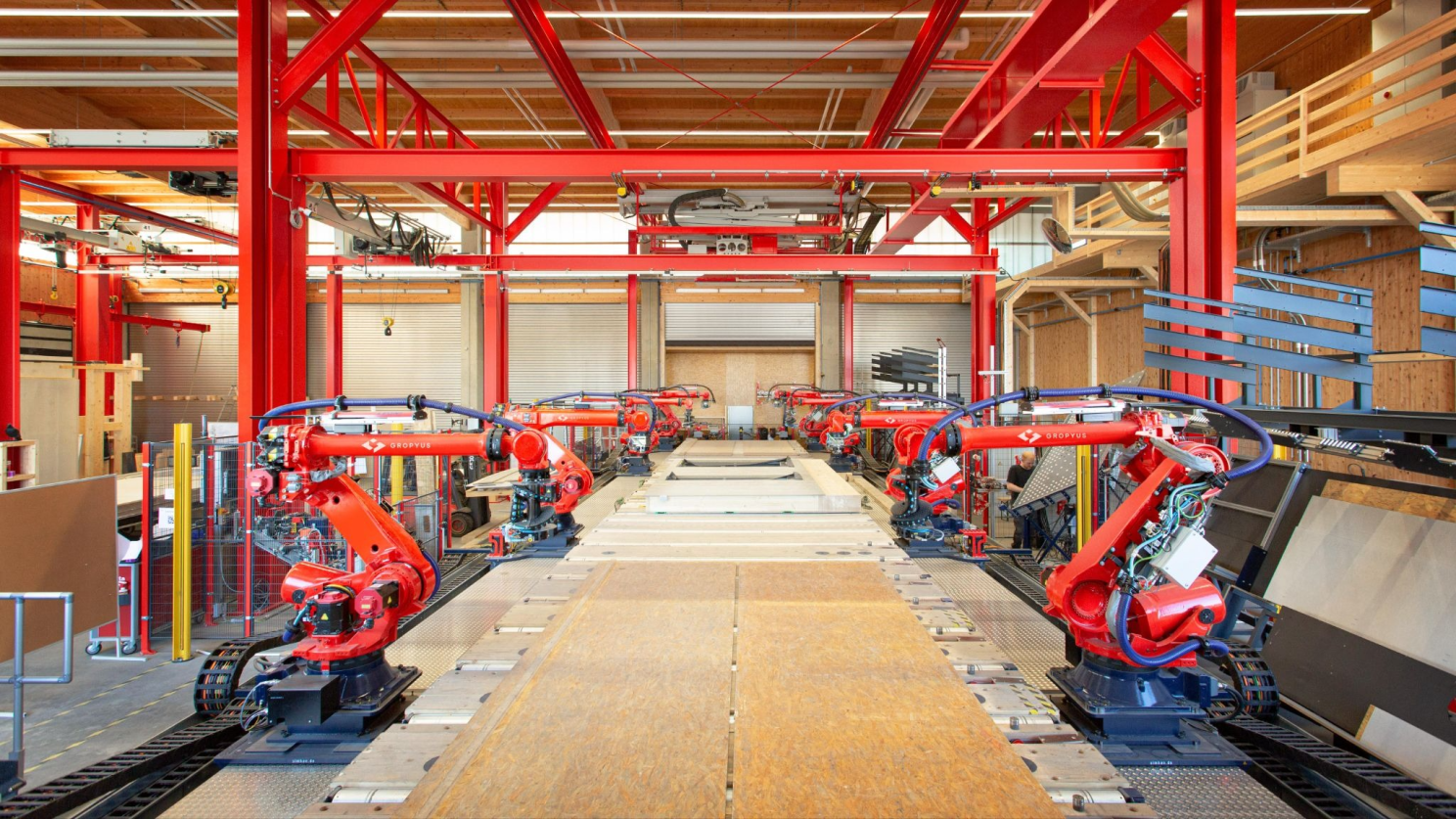
The system was deliberately two-dimensional. Rather than stacking three-dimensional volumetric modules, the team worked with flat panels assembled on site. That choice paid off in flexibility. 2D panels are easier to transport, easier to adapt, and easier to disassemble at end of life if the building ever needs to come down or be reconfigured. The only 3D element in the entire project was the bathroom pod, which came pre-plumbed as a single unit.
The facade couldn't be timber at that height due to fire restrictions, so the team used fiber cement panels combined with a large PV array covering roughly half the exterior surface. Getting PV panels to work on a timber-framed high-rise required its own coordination effort, but the standardized panel dimensions kept the overall system lean and the joint lines tight, which also improved the building's airtightness and thermal performance.
Takeaway
The more you resolve at the factory, the less you fight on the job site. Prefabrication isn't just about speed, it's also about quality.
The Federal Ministry of the Environment, Putting the Right Material in the Right Place
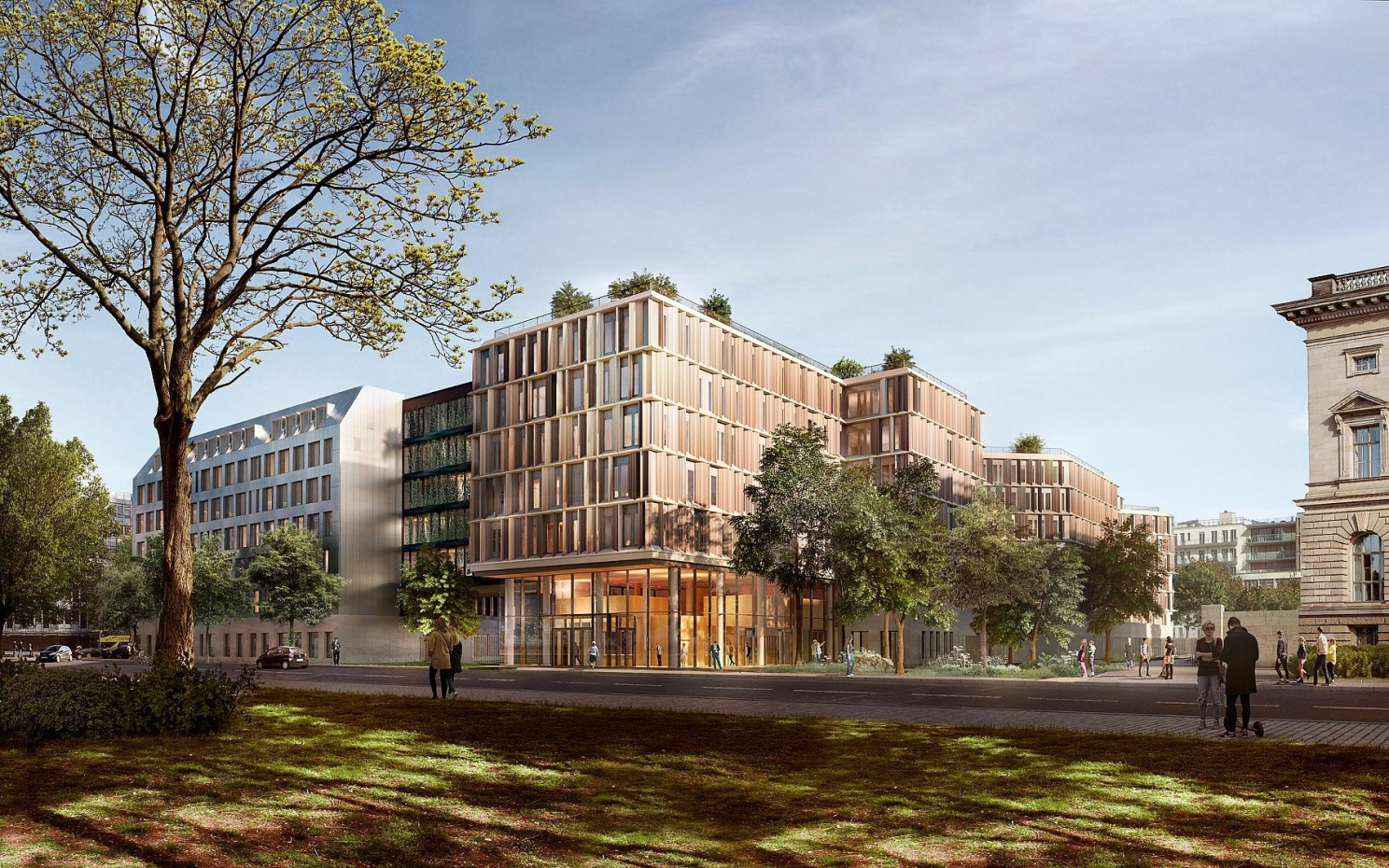
A federal government office building in Berlin doesn't sound like fertile ground for timber innovation. Single occupant offices, long corridors, a complex floor plan that branches like a tree trunk, not exactly the open-span, loft-style program that typically showcases mass timber at its best. But this project became one of Sebastian's most instructive precisely because of those constraints.
The team built what they called a matrix, a massive Excel spreadsheet that evaluated every structural component in the building against input from every discipline: structural, MEP, building physics, and fire. Columns, beams, floor decks, ceiling assemblies, each one analyzed for which material performed best in that specific location. The process took months. They ran separate exercises for the structural frame and then again specifically for the floor composition. It was painstaking, but it produced something valuable. A building where every material decision had a reason behind it.
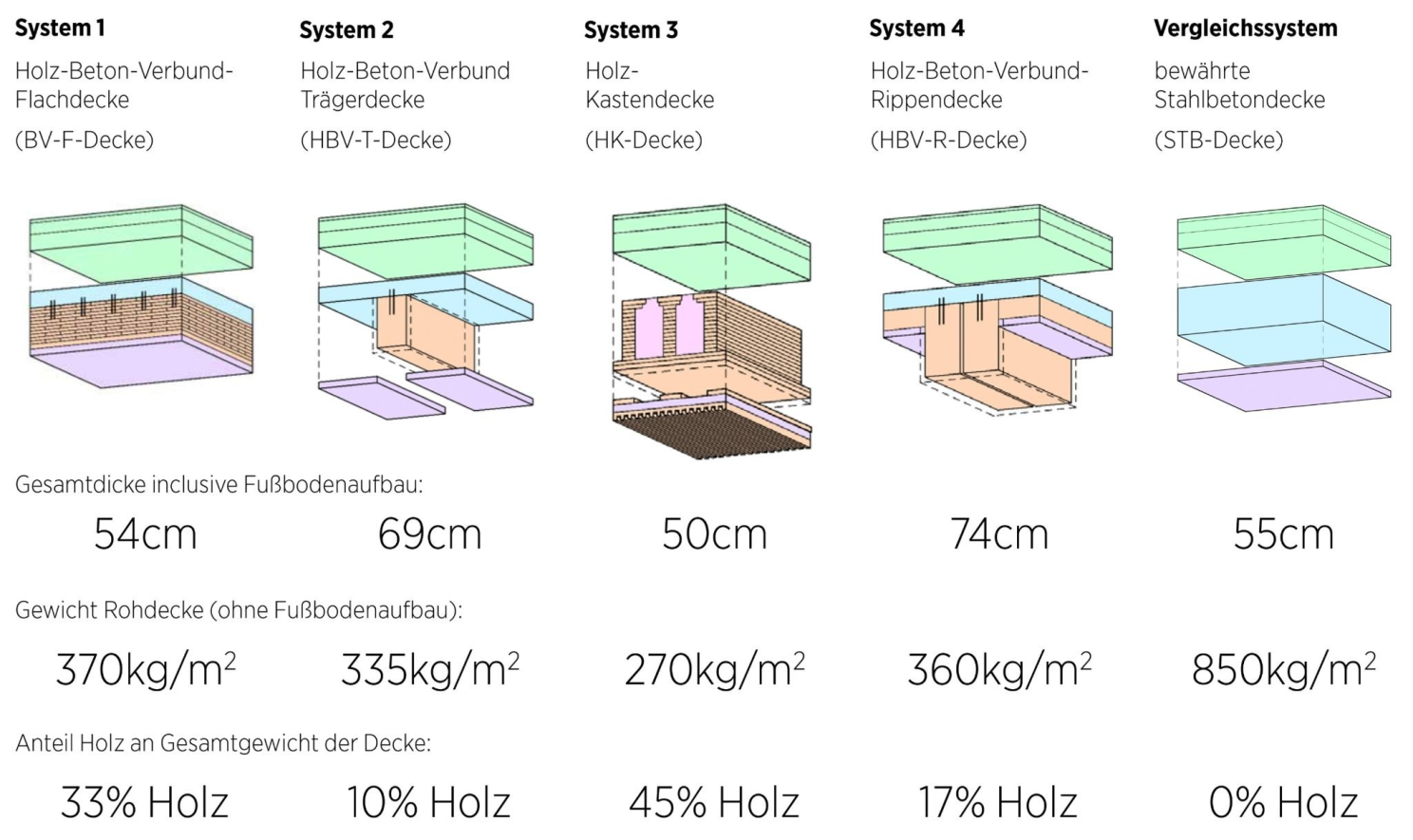
The result was that roughly 40-45% of the floors were timber, concentrated entirely in the zones where people actually work. Every individual office had exposed timber beams, columns, and ceilings, all carrying an F90 fire rating, meaning they're engineered to withstand 90 minutes of fire exposure. The corridors and mechanical areas stayed concrete. The biophilic qualities of the timber (warmth, acoustics, visual texture) were delivered exactly where occupants would feel them most. The government got a building that met every code requirement and still managed to feel like a place people actually want to show up to.
Takeaway
Timber doesn't have to be everywhere to change how a building feels. Strategic placement beats all-or-nothing every time.
An All-Timber Tower at 150 Meters
“I dare you”.
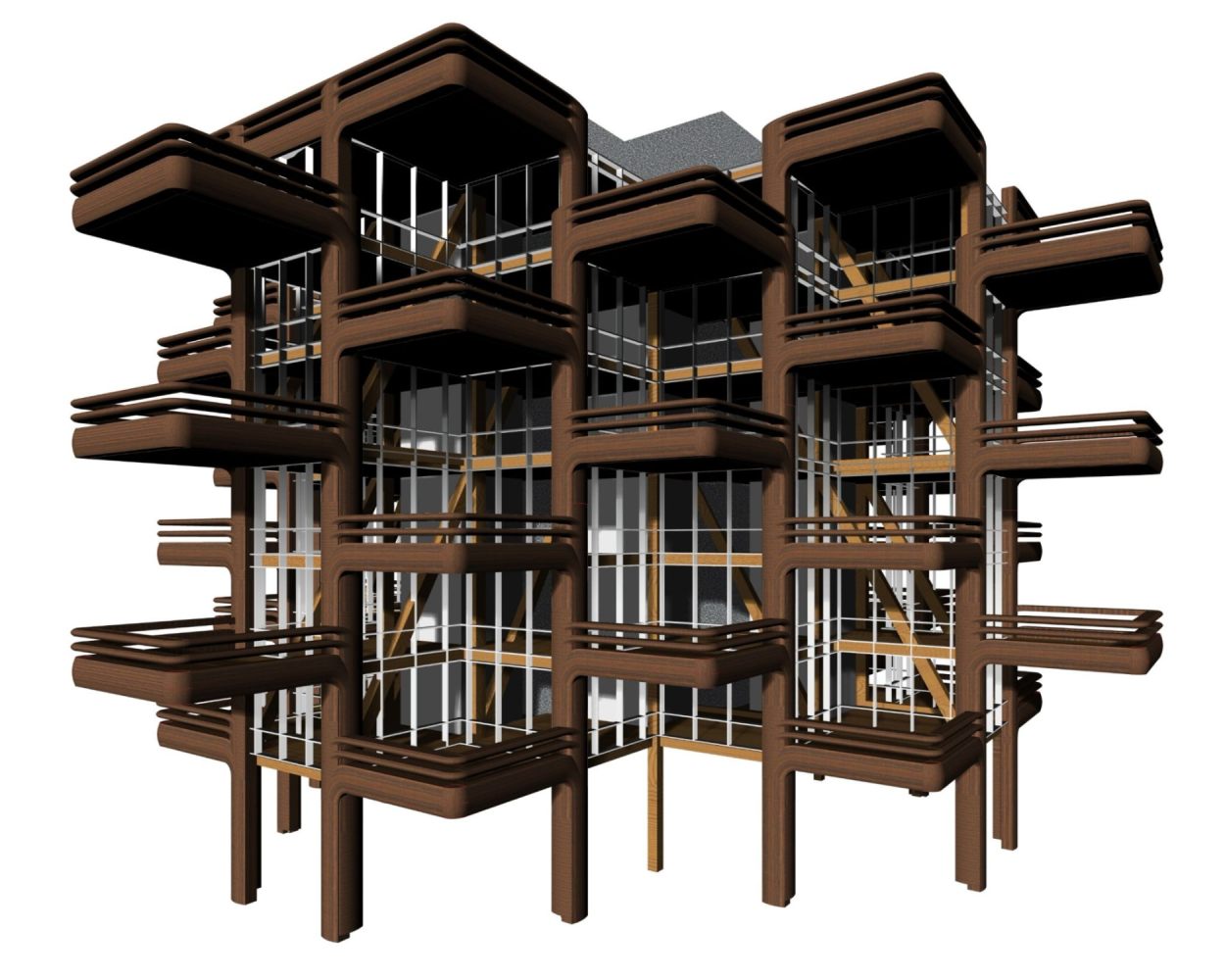
Sebastian's structural engineer challenged him to prove that a genuinely all-timber tower, no concrete or steel core, was structurally feasible at 150 meters. Challenge accepted.
Most tall timber buildings today reach the 100-meter mark by leaning on a concrete podium and a concrete or steel core at the center. Sebastian's concept takes a different approach. Two parallel timber super-frames, spaced 12 meters apart and arranged in a cross formation, handle both vertical loads and lateral forces. The core contains elevators and stairs but doesn't do the structural heavy lifting, the frames do. Steel plates, pins, and dowels handle the connections where forces are highest, but timber remains the primary structural material throughout.
It's a lighter building, a faster build, and a fundamentally different structural logic than anything currently standing at that height. The seismic performance actually benefits from timber's lighter weight and natural ductility. The concept is still in development, but the intent is to demonstrate that the assumptions everyone makes about what concrete has to do in a tall building aren't as fixed as they seem.
Takeaway
The height ceiling for mass timber keeps rising, and the people pushing it aren't doing it by tweaking existing approaches, they're questioning the structural assumptions underneath them.
Structurally Engineered Bamboo in St. Louis
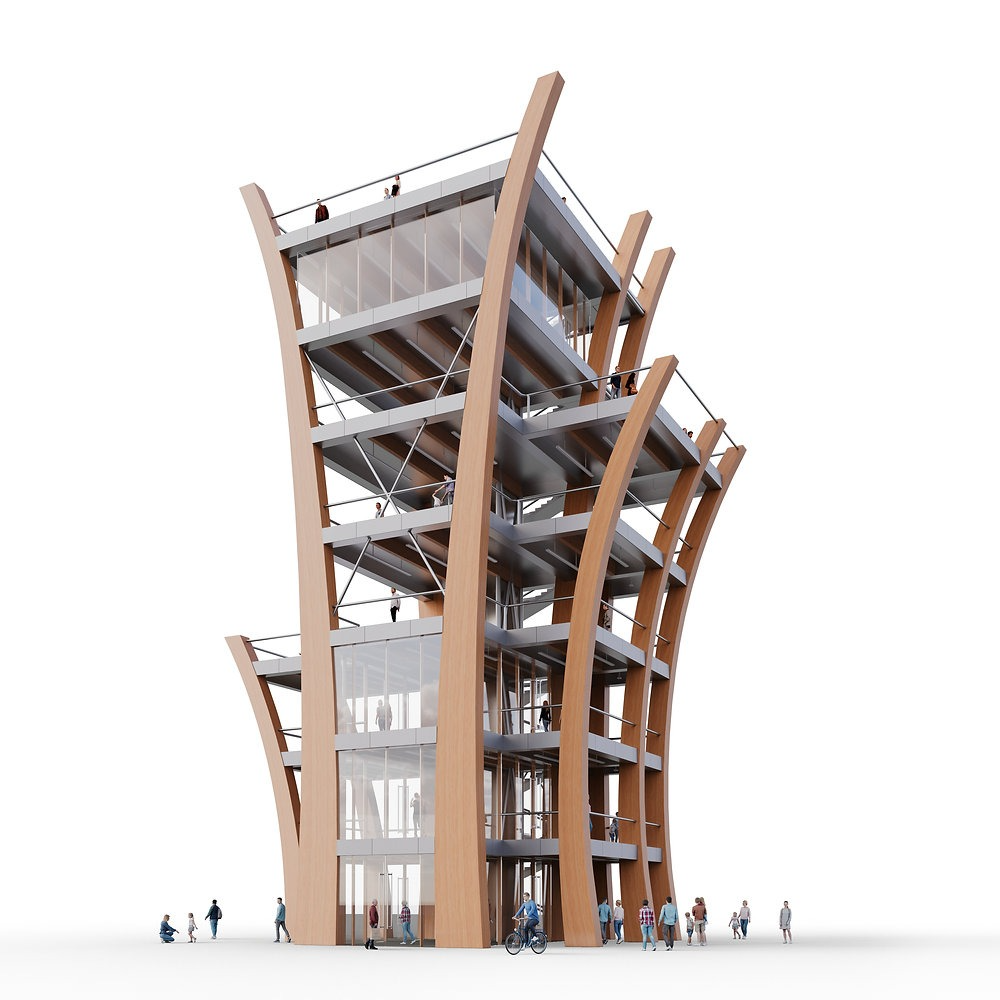
The final project introduces a material most structural engineers haven't seriously considered yet. Working with Luke D Schüette of ReNüTeq , Sebastian is developing a bamboo tower in St. Louis, a city whose iconic arch shaped the building's design language. The material is structurally engineered bamboo, or SEB. Bamboo milled down into fibers, laminated under pressure, and certified for structural use.
Bamboo grows dramatically faster than timber and sequesters roughly 60% more CO₂ per cubic meter while doing so. In laminated form it approaches the strength of hardwoods like beech. It can be processed into dense, nearly non-combustible composite panels by adding ceramic powder, giving it a fire rating that opens doors in jurisdictions with strict requirements. And unlike traditional bamboo construction, which relies on the raw stem, SEB works within the same manufacturing and connection logic that mass timber teams already know.
A 7-story demonstration tower is currently underway. A follow-on project at roughly double the height, around 60 meters, is in planning. The St. Louis project is a proof of concept, but the ambition behind it is much larger - establishing bamboo as a serious structural material for mid and high-rise construction in the US and eventually in Europe.
Takeaway
The definition of what we can build with is still expanding. Like bamboo. It's the next chapter in biogenic construction, and the people treating it that way now are going to have a significant head start.
The Thread Running Through All of It
Use the right material, in the right place, for the right reason. Solve the code problem instead of walking away from it. Push prefabrication as far as it can go. Question the structural assumptions everyone else treats as fixed. And, Sebastian's closing note, and maybe his most grounded one, don't forget the craftsman. All the robotics, engineered systems, and biogenic innovation in the world still need skilled hands to put it together. That part doesn't change.
👉 Want to grow your mass timber network? Stay up to date on industry trends and exciting new innovations like this? Join Our Newsletter